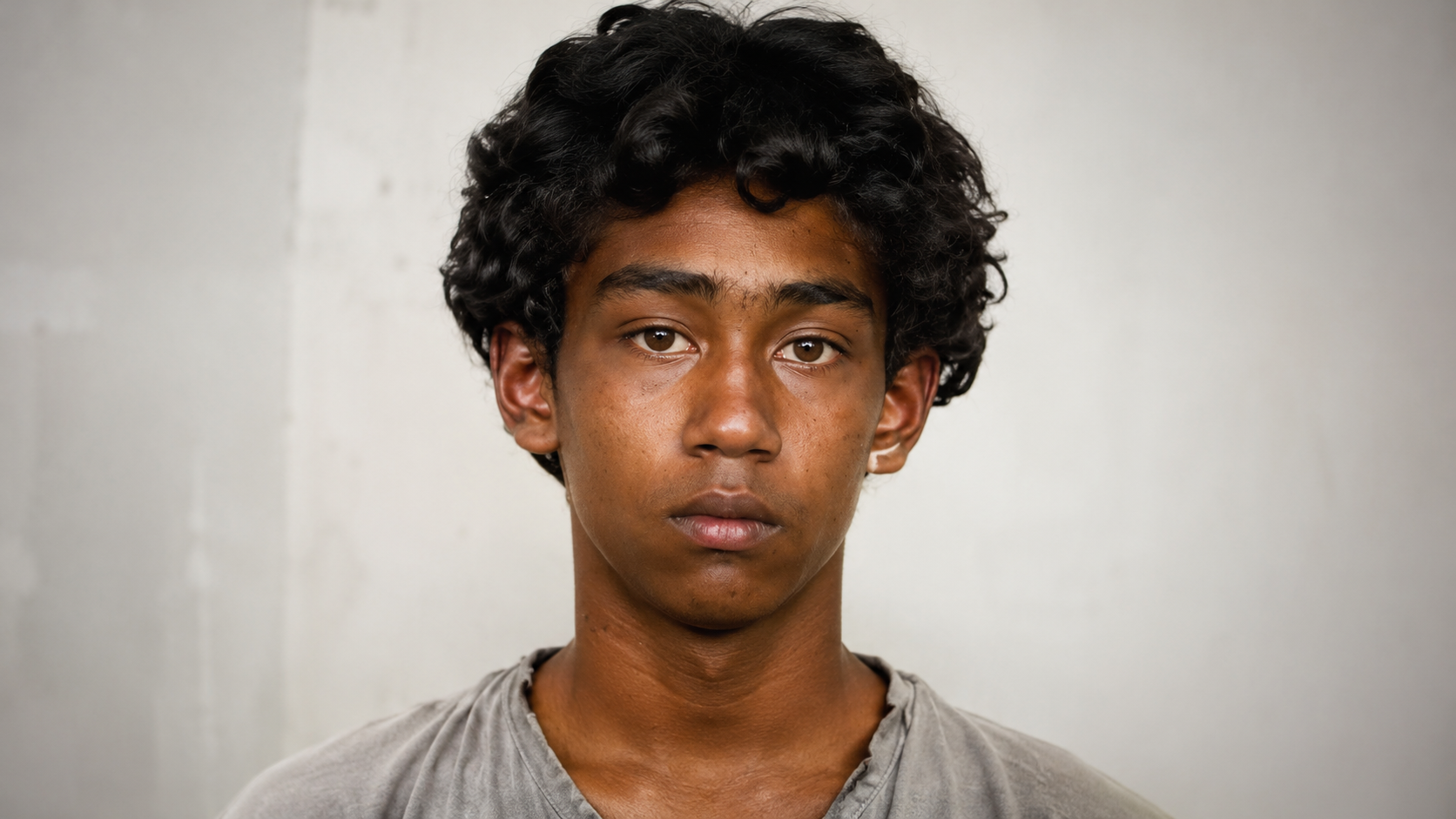
Jamie Doxtator was 14 when he disappeared from Milwaukee in January 1988. More than three years passed before his mother, Debbie Vega, learned that Jeffrey Dahmer had killed him. When reporters asked about her son, Vega described an outgoing, independent boy whose energy people sometimes misunderstood. He skipped school. He got into trouble. He also had, in his mother’s words, “a lot of love.” At a Wisconsin church that August in 1991, two photographs of Jamie stood on the altar. His mother sat in the front pew with his brother and sisters.
The boy his family called Jamie
His name appears in FBI files as James E. Doxtator. At home, he was Jamie. Born on March 1, 1973, he grew up in Green Bay, Wisconsin. By January 1988, he and his mother were living on East Pierce Street in Milwaukee. Vega identified her son as Native American in the statement prosecutors included in their criminal complaint.
Vega spoke candidly about raising him. She remembered a teenager who liked people and wanted his independence. She also remembered how readily other people misread his behavior. “Jamie was always hyperactive, and a lot of people misunderstood him,” she told the Associated Press. Her account gives the word missing a particular weight. For the people who knew him, the boy in the photograph already had a distinct personality and a familiar place in a family of five children.
What happened after Jamie left home?
Vega said Jamie left home on January 16, 1988, to get away from an abusive stepfather. She reported him missing. He never contacted her again. By the time investigators could tell her what had happened, she was living in the Tampa Bay area of Florida.
The account of Jamie’s last hours came from Dahmer himself. He told investigators he had met a young person at a Milwaukee bus stop. He offered him money, and the two traveled by bus to the house where Dahmer lived with his grandmother in West Allis, a Milwaukee suburb. There, Dahmer drugged and killed him.
One detail from their conversation would matter years later. Dahmer remembered the boy saying he lived with his mother near 10th Street and National Avenue. When prosecutors took Vega’s statement, she placed the family’s home about one block from that intersection.
How investigators identified Jamie in 1991
After Dahmer’s arrest in July 1991, detectives faced a difficult question. He had confessed to killing a boy years earlier, but investigators had no remains they could identify as Jamie’s. To establish who the boy was, they had to compare what Dahmer remembered with details someone who knew Jamie could confirm.
Dahmer described two small scars on the boy’s chest. Vega confirmed that her son had scars in those locations. Detectives also showed Dahmer a photograph of Jamie taken in September 1987, just months before he disappeared. The amended criminal complaint records that Dahmer identified the boy in the picture, though he remembered him as looking a little older and heavier. The photograph, the scars and the location of the family home all figured in the account prosecutors assembled.
On August 16, 1991, United Press International carried the news that police had identified Jamie. Its headline called him Dahmer’s “17th victim.” The wording can be confusing when the story is read today. Seventeenth referred to the order in which authorities put names to the victims. Jamie had died in 1988, several years before Dahmer’s final killing.
A memorial on the Stockbridge Munsee Reservation
Later that August, about 75 relatives and friends gathered at the Lutheran Church of the Wilderness on the Stockbridge-Munsee Reservation in Wisconsin. A Milwaukee Journal account described the altar in some detail. Flowers and two burning candles stood beside the photographs of Jamie. His mother sat with the children close by.
The pastor, the Rev. Joel Schlichtenhaufen, spoke about forgiveness. After the service, a reporter asked Vega about his appeal. She answered with a qualification that was important to her. “I don’t know, but I just can’t feel that way — not right now,” she said. Without her son’s body to bury, she explained, it was hard to imagine ever putting his death to rest.
She had a different hope for Jamie’s four surviving siblings. She wanted the service to help them believe their brother was “with God.” It was a mother’s answer to two demands that had arrived together. She was trying to understand her son’s death while helping her other children say goodbye to him.
Frequently asked questions
Were Jamie Doxtator and James Doxtator the same person?
Yes. James E. Doxtator was the name investigators recorded. Jamie was the name his family and friends used, and contemporary newspapers used both.
Was Jamie Doxtator from Green Bay or Milwaukee?
He grew up in Green Bay and later lived with his mother in Milwaukee. West Allis, the third Wisconsin city often mentioned in accounts of his life, was where Dahmer killed him.
Was Jamie Doxtator’s body ever found?
No. His family held a memorial service without his remains. Investigators connected him to Dahmer’s confession through a photograph and details that matched his mother’s account.
Was Jamie one of Jeffrey Dahmer’s youngest victims?
Yes. Jamie was 14. Konerak Sinthasomphone, whom Dahmer killed in Milwaukee in 1991, was also 14. Their deaths occurred more than three years apart.
How his mother remembered him
When Debbie Vega spoke about Jamie, she made room for the parts of him that could be difficult to explain. He could be restless, affectionate, headstrong and easily misunderstood. Then she put her own feelings into three words that needed no explanation at all. “I loved him.”